
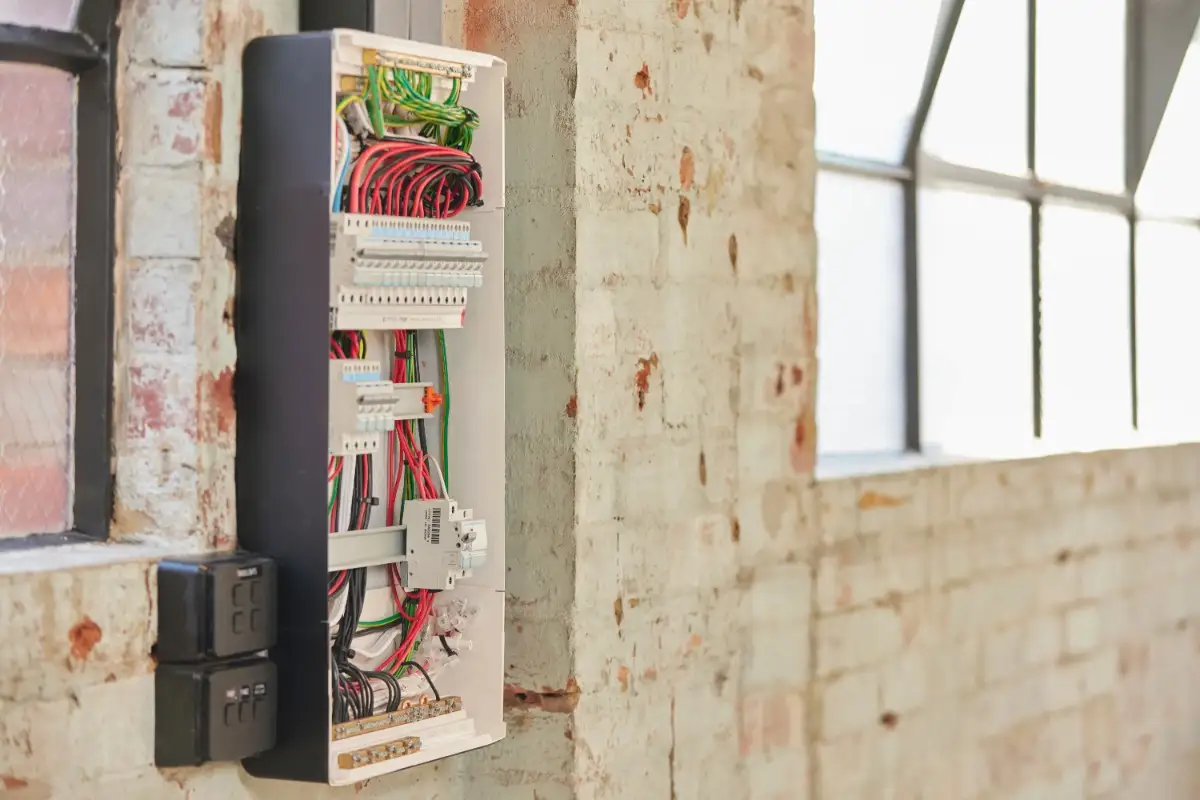
Your switchboard is the hardest-working part of your property’s electrical system — and probably the most ignored. When it’s healthy, you never think about it. When it’s failing, it usually warns you first. Here are the seven warning signs we see most often across melbourne and victoria, and what each one is really telling you.
Many victorian switchboards were installed decades ago, for a very different electrical life: a fridge, a kettle, a tv and a handful of lights. Today the same board might be feeding ducted air conditioning, an induction cooktop, a home office, a wall of chargers — or in a commercial setting, an entire fit-out of equipment the original installer never imagined. Old boards weren’t built for this load, and many of them lack the safety switches (RCDs) that modern standards require to protect people from electric shock. That mismatch is where the warning signs come from.
An occasional trip is normal — it means the protection is doing its job. But if you’re resetting the same breaker every week (or keeping a torch by the switchboard because you know the drill), that’s a pattern, not bad luck. Repeated tripping usually means a circuit is overloaded or a fault is developing somewhere on it. The breaker is protecting you from a problem; it isn’t fixing the problem.
Lights that flicker or dim when the air conditioner kicks in, the microwave runs or machinery starts up are telling you the board is struggling to distribute power evenly — or that connections somewhere are loose. Loose connections deserve particular respect: they create electrical resistance, resistance creates heat, and heat inside a switchboard is how electrical fires start.
Open your switchboard. If you see ceramic fuse holders with wire threaded through them — your board predates modern protection by a long way. Rewirable fuses are slower to respond than circuit breakers.

This is the big one, because it’s invisible until the day it matters. A safety switch monitors the electricity flowing through a circuit and cuts the power in a fraction of a second if it detects current leaking to earth. Circuit breakers protect wiring from overload; safety switches protect people from electrocution. They are not the same thing.
Quick check: safety switches have a "T" or "Test" button on them. Press it — the power on that circuit should cut instantly. If nothing on your board has a test button, you likely have no RCD protection. (And if you do have them, pressing that test button every few months is a genuinely good habit.)
This one isn’t a ‘book an inspection sometime’ sign — it’s a ‘call a licenced electrician promptly’ sign. A smell of hot or burning plastic near the switchboard, audible buzzing or crackling, warm spots on the panel, or brown discolouration around fuses and breakers all indicate that something inside is overheating right now.
Sometimes the warning sign isn’t the board — it’s your plans. Air conditioning, an electric vehicle charger, a pool pump, commercial kitchen equipment, workshop machinery, a major renovation: high-demand additions can push an ageing board past its safe capacity even if it’s been coping fine until now. The right sequence is to have the switchboard assessed before the new equipment is installed.
No drama, no symptoms — just a switchboard that’s been quietly doing its thing since the property was built in another era. This is the sneakiest category, because ‘it still works’ feels like proof it’s fine. It isn’t. Components age, standards move on, and the way you use electricity today bears no resemblance to what the board was designed for.
Here’s the honest economics of switchboard problems: they only ever get dearer. A loose connection found during an inspection is a minor repair. The same connection left to cook for two years can mean damaged wiring, destroyed equipment, an insurance claim complicated by non-compliance — or far worse. A planned upgrade happens on a day you choose, with power off for a few controlled hours. An emergency failure happens on the day the board chooses, which is reliably the least convenient one available.
The good news is that fixing all of the above is a well-trodden, one-day job for most properties. A modern switchboard upgrade typically means replacing old fuses with circuit breakers, adding full RCD safety-switch protection, properly labelling every circuit, and making sure the board has capacity for how the property is used today — with room for tomorrow. Power is off for part of the day, everything is tested before handover, and you receive a Certificate of Electrical Safety for your records.
If you’ve recognised your own switchboard anywhere in this article the next step is simple: get it looked at by an A-Grade licenced electrician. It costs little, takes an hour or so, and replaces uncertainty with a clear, prioritised answer.
Book a switchboard assessment with Techniko Group — honest advice, itemised quotes and A-Grade licenced electricians across Melbourne and regional Victoria.