
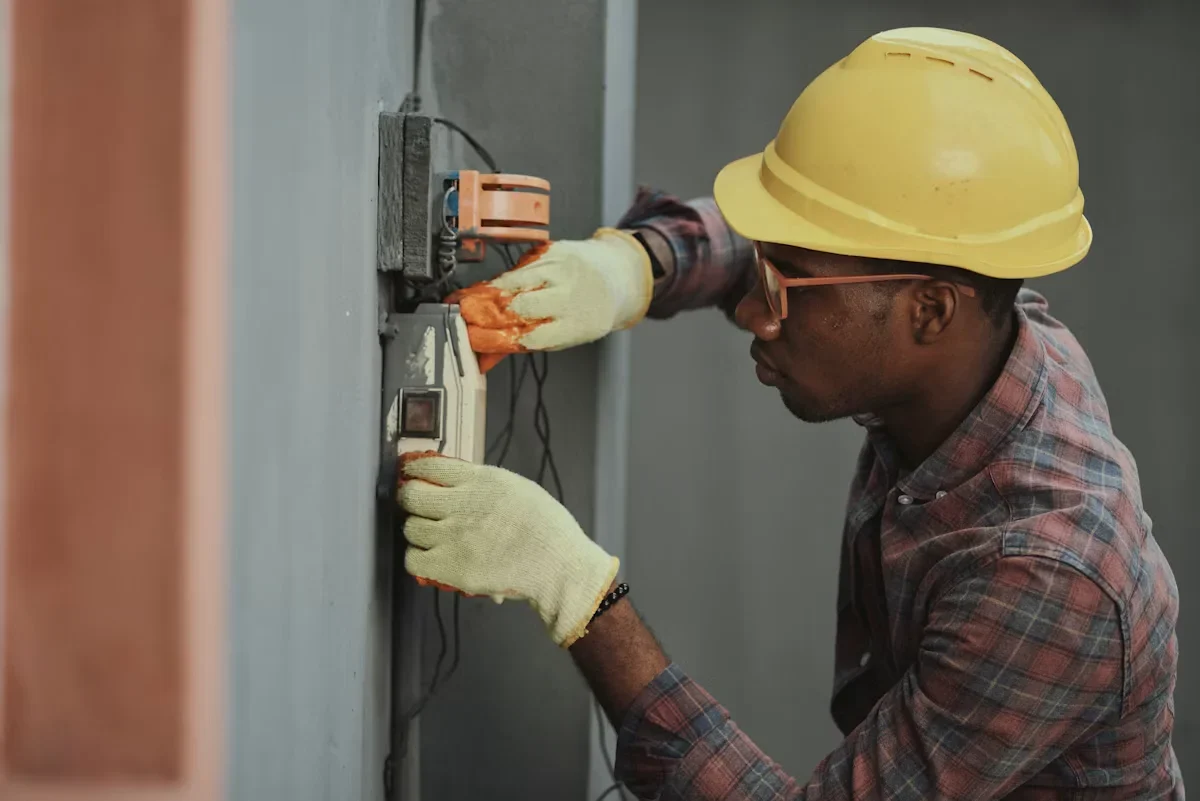
If your organization utilizes plug-in equipment, understanding the official Test & Tag protocols ensures you protect your team while seamlessly avoiding steep non-compliance penalties. Let’s break down the essential regulations and operational requirements that govern safety in Victoria.
An occasional trip is normal — it means the protection is doing its job. But if you’re resetting the same breaker every week (or keeping a torch by the switchboard because you know the drill), that’s a pattern, not bad luck. Repeated tripping usually means a circuit is overloaded or a fault is developing somewhere on it. The breaker is protecting you from a problem; it isn’t fixing the problem. A licensed electrician can identify whether the fix is redistributing the load, adding a circuit, or repairing a fault — all of which are cheaper than what happens if the warning is ignored.
Lights that flicker or dim when the air conditioner kicks in, the microwave runs or machinery starts up are telling you the board is struggling to distribute power evenly — or that connections somewhere are loose. Loose connections deserve particular respect: they create electrical resistance, resistance creates heat, and heat inside a switchboard is how electrical fires start. If your lighting has developed a “personality,” it’s time for an inspection.
Open your switchboard. If you see ceramic fuse holders with wire threaded through them your board predates modern protection by a long way. Rewirable fuses are slower to respond than circuit breakers. the wrong gauge of wire (or the infamous “temporary” nail) turns a safety device into a fire hazard. A fuse-to-breaker conversion is one of the highest-value upgrades any older property can make.

This is the big one, because it’s invisible until the day it matters. A safety switch monitors the electricity flowing through a circuit and cuts the power in a fraction of a second if it detects current leaking to earth. Circuit breakers protect wiring from overload; safety switches protect people from electrocution. They are not the same thing, and plenty of older boards have breakers but no RCDs at all. Modern standards require RCD protection on new circuits for good reason. If you don’t know whether your board has safety switches, that alone is worth a phone call.
Quick check: safety switches have a "T" or "Test" button on them. Press it — the power on that circuit should cut instantly. If nothing on your board has a test button, you likely have no RCD protection. (And if you do have them, pressing that test button every few months is a genuinely good habit.)
This one isn’t a “book an inspection sometime” sign — it’s a “call a licensed electrician promptly” sign. A smell of hot or burning plastic near the switchboard, audible buzzing or crackling, warm spots on the panel, or brown discolouration around fuses and breakers all indicate that something inside is overheating right now. Switch off what you safely can, don’t put it off until the weekend, and get professional eyes on it. Switchboard fires are among the most common electrical fires in Australian properties, and nearly all of them announced themselves first.
Sometimes the warning sign isn’t the board — it’s your plans. Air conditioning, an electric vehicle charger, a pool pump, commercial kitchen equipment, workshop machinery, a major renovation: high-demand additions like these can push an ageing board past its safe capacity even if it’s been coping fine until now. The right sequence is to have the switchboard assessed before the new equipment is installed, so any upgrade is planned and quoted up front rather than discovered mid-project. (It’s one of the first things we check on every installation job, for exactly this reason.)
No drama, no symptoms — just a switchboard that’s been quietly doing its thing since the property was built in another era. This is the sneakiest category, because “it still works” feels like proof it’s fine. It isn’t. Components age, standards move on, and the way you use electricity today bears no resemblance to what the board was designed for. If yours hasn’t been professionally inspected in living memory, an electrical safety check will tell you exactly where it stands — often the answer is “it’s due, but it’s not urgent,” which is precisely the kind of thing you want to know while it’s still true.
Here’s the honest economics of switchboard problems: they only ever get dearer. A loose connection found during an inspection is a minor repair. The same connection left to cook for two years can mean damaged wiring, destroyed equipment, an insurance claim complicated by non-compliance — or far worse. A planned upgrade happens on a day you choose, with power off for a few controlled hours. An emergency failure happens on the day the board chooses, which is reliably the least convenient one available.
There’s also the insurance angle that many property owners don’t consider until it’s too late: insurers increasingly expect evidence that electrical systems are maintained and compliant. Documentation from a licensed electrician — inspection reports, Certificates of Electrical Safety — is cheap insurance for your actual insurance.
The good news is that fixing all of the above is a well-trodden, one-day job for most properties. A modern switchboard upgrade typically means replacing old fuses with circuit breakers, adding full RCD safety-switch protection, properly labelling every circuit, and making sure the board has capacity for how the property is used today — with room for tomorrow. Power is off for part of the day, everything is tested before handover, and you receive a Certificate of Electrical Safety for your records. If you’d like the full picture, our switchboard repairs and upgrades page walks through the whole process.
If you’ve recognised your own switchboard anywhere in this article. the next step is simple: get it looked at by an A-Grade licensed electrician. It costs little, takes an hour or so, and replaces uncertainty with a clear, prioritised answer.
Book a switchboard assessment with Techniko Group — honest advice, itemised quotes and A-Grade licensed electricians across Melbourne and regional Victoria.